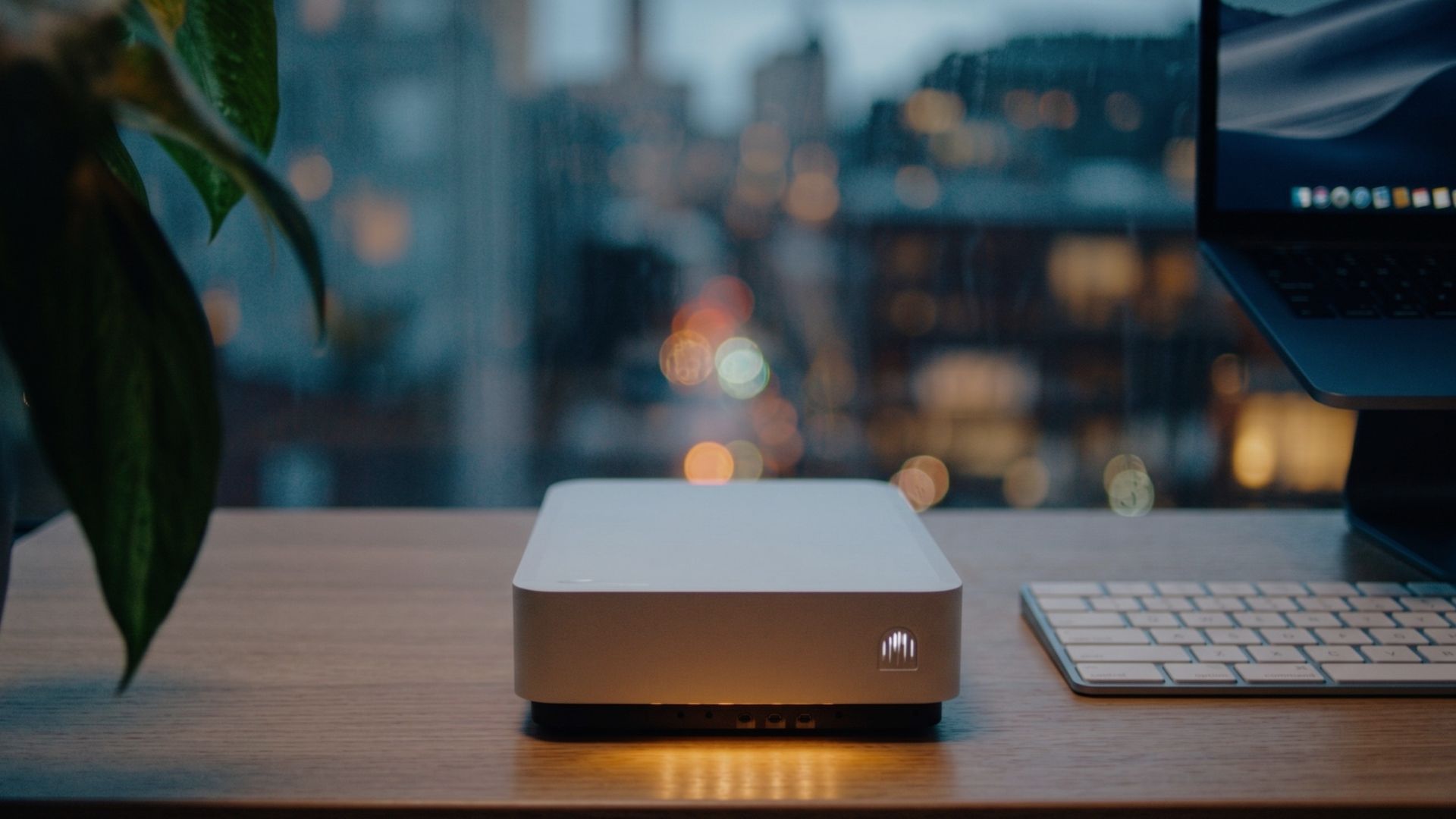
Mid-market & enterprise
Enterprises say they want private AI. They mostly buy Copilot. Between a A$45 seat and a A$250K AI factory there is a gap nobody local is filling.
Enterprises say they want private AI. They mostly buy Copilot. Between a A$45 seat and a A$250K AI factory there is a gap nobody local is filling.
| Estimate | Figure | Source |
|---|---|---|
| Sovereign AI, global | US$40b (2025) to US$148b (2032), ~21% a year | MarketsandMarkets Analyst |
| Sovereign AI, Asia Pacific | US$11.2b (2025), 22.6% a year, fastest region | MarketsandMarkets Analyst |
| Sovereignty-shaped AI spend | 30–40% of AI spend, a US$500–600b market by 2030 | McKinsey, Mar 2026 |
| Worldwide AI spending | US$2.7 trillion in 2026, 56% of it infrastructure | Gartner, 16 Sep 2026 |
| Open-weight models' share of enterprise use | 11% in 2025, down from 19% | Menlo Ventures |
| AI use cases bought rather than built | 76% in 2025, up from 53% | Menlo Ventures |
Most of the sovereign AI total is national GPU clusters and hyperscaler regions. It shows the direction of travel, not Selma's addressable market. Gartner also notes enterprises are mostly adopting "simpler embedded AI features from their incumbent software providers", which means Copilot.
| Sector | Regulatory pull | Access for EthicAI | What's driving it |
|---|---|---|---|
| Smaller APRA entities (mutuals, credit unions, insurers, super funds) | Strong | Medium | APRA's 30 April 2026 AI letter: map third and fourth-party AI dependencies, tested exit plans, no single-provider reliance. CPS 230 contract deadline 1 July 2026. Go Abacus targets exactly this segment in the US. |
| Health (private hospitals, aged care groups, LHD admin) | Strong | Medium | State frameworks bar patient data from public AI. Stay out of clinical decisions (TGA); policy, incidents, credentialing fit. |
| Universities and research groups | Medium-strong | Good | Foreign interference guidelines, ARC and NHMRC confidentiality, Indigenous research data. Grant-funded groups can buy without central IT. |
| Mid-size and in-house legal | Medium | Good | Privilege. Top-tier firms have gone to Harvey in its Australian environment. |
| Utilities and water | Medium-strong | Medium | SOCI Act; segregated networks for operational teams. |
| Mid-tier mining, remote sites | Operational need | Low-medium | Offline procedures and manuals; native title and heritage data. Tier-1 miners run AI centrally on cloud. |
| Defence industry | Very strong | Low for now | ITAR, AUKUS, DISP. Needs clearances. Palantir won Defence (A$7.6M) and AUSTRAC (A$5.06M) work without open tender in 2026. |
| Tier-1 banks, miners, Big 4, top law | Strong | Very low | Incumbents embedded. Partner route only. |
A pack, not a pitch. Selma's fixed model versions, Ledger, Trace and client-owned box map neatly to what APRA is asking for. A ready-made "CPS 230 and APRA AI letter" pack (contract schedule, model-change policy, incident definitions, exit plan) would make Selma easier to buy than most AI vendors.
| Offer | What | Price |
|---|---|---|
| NVIDIA AI Enterprise | Software stack most AI factories need | US$4,500 per GPU per year (~A$6,300) Published |
| NVIDIA 8-GPU servers | H200 / B300 systems | ~A$420K–560K each |
| Dell AI Factory, HPE Private Cloud AI, Lenovo, Cisco | Turnkey on-prem stacks | Quote only; entry production ~A$150K–800K Estimate |
| Red Hat OpenShift AI | MLOps platform | ~A$24K–28K per node per year, excluding hardware |
| Mistral enterprise (self-hosted) | Private deployment | From ~US$20K a month |
| Cohere North / Command A | Private agent platform, runs on two GPUs | Six-figure USD year-one minimums reported |
| IBM watsonx on-prem | Per-core licences | Large deals US$1.5M–5M a year |
| Google Gemini, air-gapped | Single 8-GPU Dell server via Cirrascale | Not published; A$500K+ Estimate |
| AWS AI Factories, Azure Local | Hyperscaler-managed on-prem | Multi-million / per-core subscription |
| Go Abacus Go1 (US) | Appliance for banks and credit unions; up to 3 GPUs, 2,000 users; fixed price | Not published; likely A$100K+ a year Estimate |
| Zylon in a Box (Spain/US) | Commercial PrivateGPT for regulated industries | Quote only |
| ChatGPT Enterprise (reference) | ~150-seat minimum | ~A$151K a year |
| Copilot (reference) | 200 users | ~A$108K a year |
| Provider | What | On-prem? |
|---|---|---|
| Katonic AI (Sydney) | Sovereign AI platform sold mainly to telcos and MSPs; air-gap capable; cites a 20–40% "sovereignty premium" | Platform for big buyers |
| Sovereign Australia AI | 256 B200 GPUs at NEXTDC; A$10M copyright fund; early stage | Cloud |
| Maincode (Matilda) | Australian-trained LLM; bank pilots; powered Mastercard agent-pay trial | Cloud / dedicated |
| Macquarie Launch AI | Fixed monthly capacity pricing from Australian data centres | Cloud |
| OpenAI for Australia + NEXTDC | Sovereign campus, first phase H2 2027 | Cloud |
Every Australian sovereign player sells cloud or a platform for large buyers. None sells a low-cost on-site appliance with a governance layer for one department or site. The risk is that "sovereign" comes to mean "onshore cloud" and buyers stop asking for on-prem.
One Selma per sensitive function: legal, HR and employee relations, internal audit, ESG reporting, board secretariat, complaints, research office. 5–50 users, a clear owner, a budget that avoids enterprise IT procurement for a pilot.
Remote mines, regional hospitals, water plants, island operations: offline access to procedures, manuals and incident history. Links straight to the Pacific thinking.
Standard units across many sites, managed centrally. Aged care chains, health networks, mutual banks with branches, universities by faculty.
A mid-tier integrator resells or white-labels Selma, or Selma software runs on the client's own Dell or Lenovo hardware.
A 384GB, four-GPU box running a 400B-class open model, near frontier quality, at ~A$300K plus A$60–100K a year. Answers the "small model" objection. Details.
| Shape | A$ | Note |
|---|---|---|
| Department cell | 25K–40K commissioning + 15K–30K / yr | Year one ~A$40K–70K, often under a function head's delegation |
| Selma Pro (larger GPU) | +15K–25K / yr | For 30B+ models or more concurrent users |
| Fleet (10+ units) | 150K–400K / yr | Where it competes with a departmental AI factory |
| Integrator margin | 25–40% | Supportable at ~A$3K hardware |
Too cheap is its own problem. A A$3K box sold for A$5K will be dismissed as a hobby project in an enterprise. What's being priced is the governance, evidence and service.
| Requirement | Who asks | Indicative cost and time Estimates |
|---|---|---|
| Security questionnaire (200–400 questions) | Everyone | Days, reusable |
| ISO 27001 | Corporates, health, universities | A$30K–80K, 6–12 months |
| ISO 42001 (AI management) | APRA entities, government, increasingly | Emerging; a strong fit for a governance-led product |
| SOC 2 Type II | US-owned multinationals, fintech | A$40K–100K + observation period |
| IRAP | Federal, defence-adjacent | A$50K–150K+ |
| Penetration test | Everyone | A$15K–40K, annually |
| Model provenance, SBOM | APRA, defence | Qwen may be rejected; offer Llama, Mistral, Gemma, Granite |
| Physical form | Data centres, defence, health | A white glass tower is a visual objection; a rack-mount option |